Built by a team that posts on LinkedIn every day. This is what we built.
Your voice, posted daily, without the daily work.
A draft in your voice every evening. Five minutes to approve. Nothing goes out without you.Thoughtcast writes in the way you actually talk, sends you a draft every evening, and only ever publishes after you say yes. Five minutes a day. Nothing goes out without you.
Built and used daily by the team behind it. Every feature on this page runs on our own accounts first, before it ever reaches a client.
The proof
We didn't build this to sell you something. We built it because we needed it.
We run large-scale events and AI systems, with no time to write posts ourselves. So we built the tool we needed first.
We run large-scale events and build AI systems for a living. Both need us visible on LinkedIn. Neither leaves 45 minutes a day free to write a post.
Read more
We tried the usual fixes first. A ghostwriter got the facts right and the voice wrong. Scheduling tools solved posting, not writing. None of it closed the loop, so we built the tool that does.
Our own accounts are the first ones on it — every feature gets used by us before it ever reaches a client.
Drafted by the same system that would draft yours.
How it works
Here's what happens on your phone. That's the whole product.
No dashboard you have to remember to open. No content calendar to manage. The work comes to you.
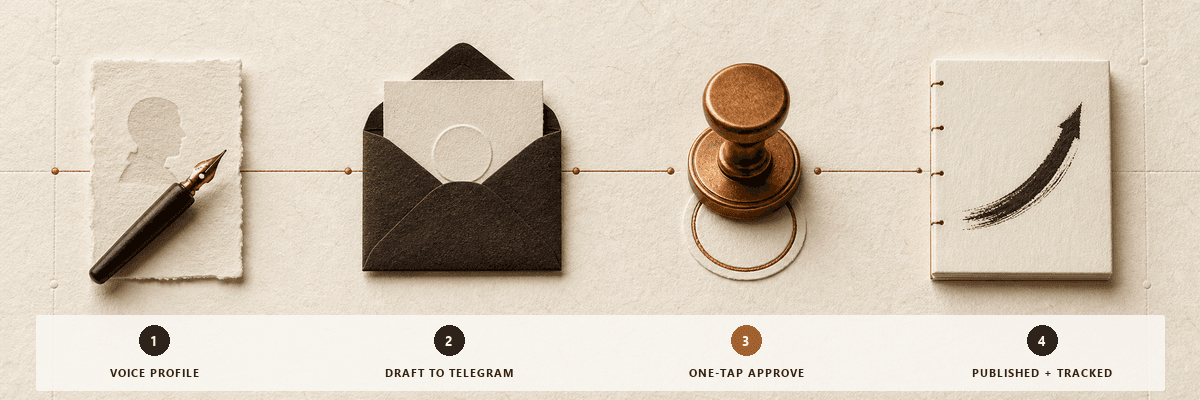
01
7:14 PM. Your phone buzzes.
Tomorrow's post, written in your voice, ready to read.
02
You have three buttons.
Approve, Edit, or Skip. Your call, every time.
03
8:00 AM. It's live.
The approved post publishes to your LinkedIn. That's it.
What's actually in the loop
Everything after "approve" is handled. Everything before it is yours to shape.
Text posts.
Drafted against your voice profile and content pillars, every time.
Images.
Generated in your visual style, or upload your own from Telegram.
Carousels.
Multi-slide LinkedIn documents in your brand. Coming soon.
Daily topic menu.
Five suggested topics every evening. Tap the one you want.
News-reactive posts.
A practitioner's take, drafted the same day something breaks in your industry.
Weekly activity summary.
A weekly Telegram recap: what you posted, your streak, the topics covered.
Performance analytics.
Impressions, engagement, what's working. Coming soon.
Brief mode.
Send a voice note or article with “post about this,” get a draft back in minutes.

How we learn your voice
Same facts, four completely different posts.
Built from a real interview and your own past posts, including what you'd never say. Four fictional profiles below show how differently the same tool can write.
Read more
Built from ten to fifteen interview questions plus five to ten of your own past posts, we build a voice profile: tone, rhythm, and just as important, the words you'd never use, what we call absence patterns.
The four profiles below are illustrative, not real clients.

The operator-founder.
Short sentences. Numbers over adjectives. Opens with the result, not the setup. Would never use a rhetorical question or a “here's the thing” hook.

The craft consultant.
Leads with a story or a specific moment, not a thesis statement. Warm, a little slower, comfortable with a paragraph that takes its time. Would never compress a lesson into a listicle.

The technical founder.
Builds an argument from first principles, names the assumption before the conclusion. Precise word choice, comfortable with technical terms, unbothered by long posts. Would never round off an idea for the sake of a punchier line.

The CXO.
Measured, big-picture, speaks in terms of markets and decisions rather than daily grind. Rarely first-person “I,” more often “we” and “the industry.” Would never use hype language or exclamation points.
Same topic, four different posts, because your voice profile decides what gets written, not just how it sounds.
Give all four the same topic and you'd get four posts that don't read like the same tool wrote them. That's the point. Your voice profile isn't a style filter over generic AI writing, it's the thing deciding what gets written in the first place.
Sample work
See the range, not just the pitch.
Illustrative voices, not client work. No real names, no real companies, just the writing.
Jordan
Founder, Acme Labs · AI infrastructure
2 weeks ago
We stopped hiring for "culture fit" eight months ago. Here's what replaced it.
Read full post
Three questions, asked in every interview, no exceptions:
1. What's a decision you made with incomplete information, and how did it turn out? 2. What's something you used to believe about your work that you don't anymore? 3. What did you build or fix last week that nobody asked you to?
That's it. No brain teasers, no "tell me about a time." Just evidence.
Culture fit was a proxy for "I liked talking to this person," which is a terrible hiring signal dressed up as a good one. It filters for people like the interviewer, not people who'll do the job well.
These three questions filter for judgment, self-correction, and initiative. Three things that actually predict performance six months in.
Our last four hires came through this exact process. All four are still here. All four are doing work that matters. That's not a coincidence, that's a better filter.
If your interview process is mostly vibes, it's probably mostly luck too.
Three questions, asked in every interview, no exceptions:
1. What's a decision you made with incomplete information, and how did it turn out? 2. What's something you used to believe about your work that you don't anymore? 3. What did you build or fix last week that nobody asked you to?
That's it. No brain teasers, no "tell me about a time." Just evidence.
Culture fit was a proxy for "I liked talking to this person," which is a terrible hiring signal dressed up as a good one. It filters for people like the interviewer, not people who'll do the job well.
These three questions filter for judgment, self-correction, and initiative. Three things that actually predict performance six months in.
Our last four hires came through this exact process. All four are still here. All four are doing work that matters. That's not a coincidence, that's a better filter.
If your interview process is mostly vibes, it's probably mostly luck too.
Sam
Independent consultant · Design systems & strategy
1 month ago
A client once told me she almost didn't hire me because my proposal "felt too honest."
Read full post
I'd written, plainly, that I didn't think her business needed a rebrand. It needed clearer pricing and a website that explained what she actually did. The rebrand could wait a year.
She said most consultants tell you what you called them for. I told her what she actually needed instead, which was smaller, cheaper, and less exciting to sell.
We worked together for the smaller thing. Eighteen months later she came back for the rebrand, and by then she knew exactly what she wanted from it, because the business had grown into a clearer shape first.
I think about that conversation whenever I'm tempted to say yes to the bigger scope because it's the bigger scope. The honest answer is usually smaller than the pitch. It's also the one that holds up a year later.
Good consulting sometimes looks like talking yourself out of the sale.
I'd written, plainly, that I didn't think her business needed a rebrand. It needed clearer pricing and a website that explained what she actually did. The rebrand could wait a year.
She said most consultants tell you what you called them for. I told her what she actually needed instead, which was smaller, cheaper, and less exciting to sell.
We worked together for the smaller thing. Eighteen months later she came back for the rebrand, and by then she knew exactly what she wanted from it, because the business had grown into a clearer shape first.
I think about that conversation whenever I'm tempted to say yes to the bigger scope because it's the bigger scope. The honest answer is usually smaller than the pitch. It's also the one that holds up a year later.
Good consulting sometimes looks like talking yourself out of the sale.
Alex
Co-founder, DataFlow · ML infrastructure
3 weeks ago
We spent three weeks building a feature nobody used, and the postmortem taught us more than the launch would have.
Read full post
The root cause wasn't the feature. It was how we validated the need for it. We'd asked users "would this be useful," and they said yes, because saying yes to a hypothetical costs nothing. What we should have asked was what they were currently doing instead, and how painful that current path actually was.
"Would you use X" measures politeness. "What do you do today, and how much does it cost you" measures demand.
We've since rebuilt our discovery process around the second question exclusively. It's slower. It produces fewer feature ideas. The ones that survive it ship at a much higher hit rate, because they're solving a cost someone already told us about, not a hypothetical they agreed to be nice.
First principle worth keeping: if the question can be answered with a costless yes, the answer tells you nothing.
The root cause wasn't the feature. It was how we validated the need for it. We'd asked users "would this be useful," and they said yes, because saying yes to a hypothetical costs nothing. What we should have asked was what they were currently doing instead, and how painful that current path actually was.
"Would you use X" measures politeness. "What do you do today, and how much does it cost you" measures demand.
We've since rebuilt our discovery process around the second question exclusively. It's slower. It produces fewer feature ideas. The ones that survive it ship at a much higher hit rate, because they're solving a cost someone already told us about, not a hypothetical they agreed to be nice.
First principle worth keeping: if the question can be answered with a costless yes, the answer tells you nothing.
Carousels, in your brand's world
Sample work — illustrative brands, not client work. Three fictional identities, three completely different visual languages, same underlying carousel-document product. Drag or use the arrows to flip through each one.
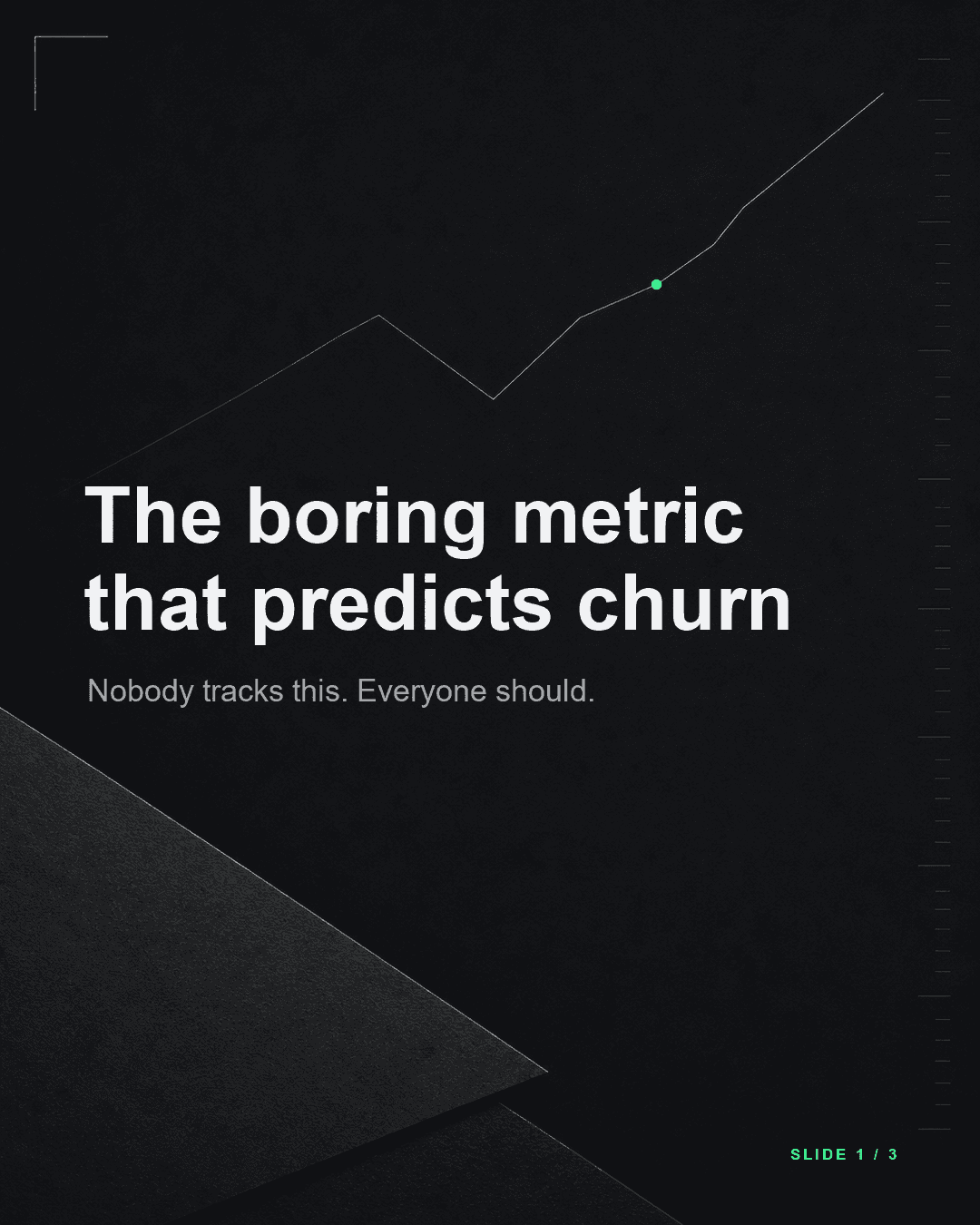
LedgerCo
Fintech SaaS — dark, torn-paper editorial
1 / 3
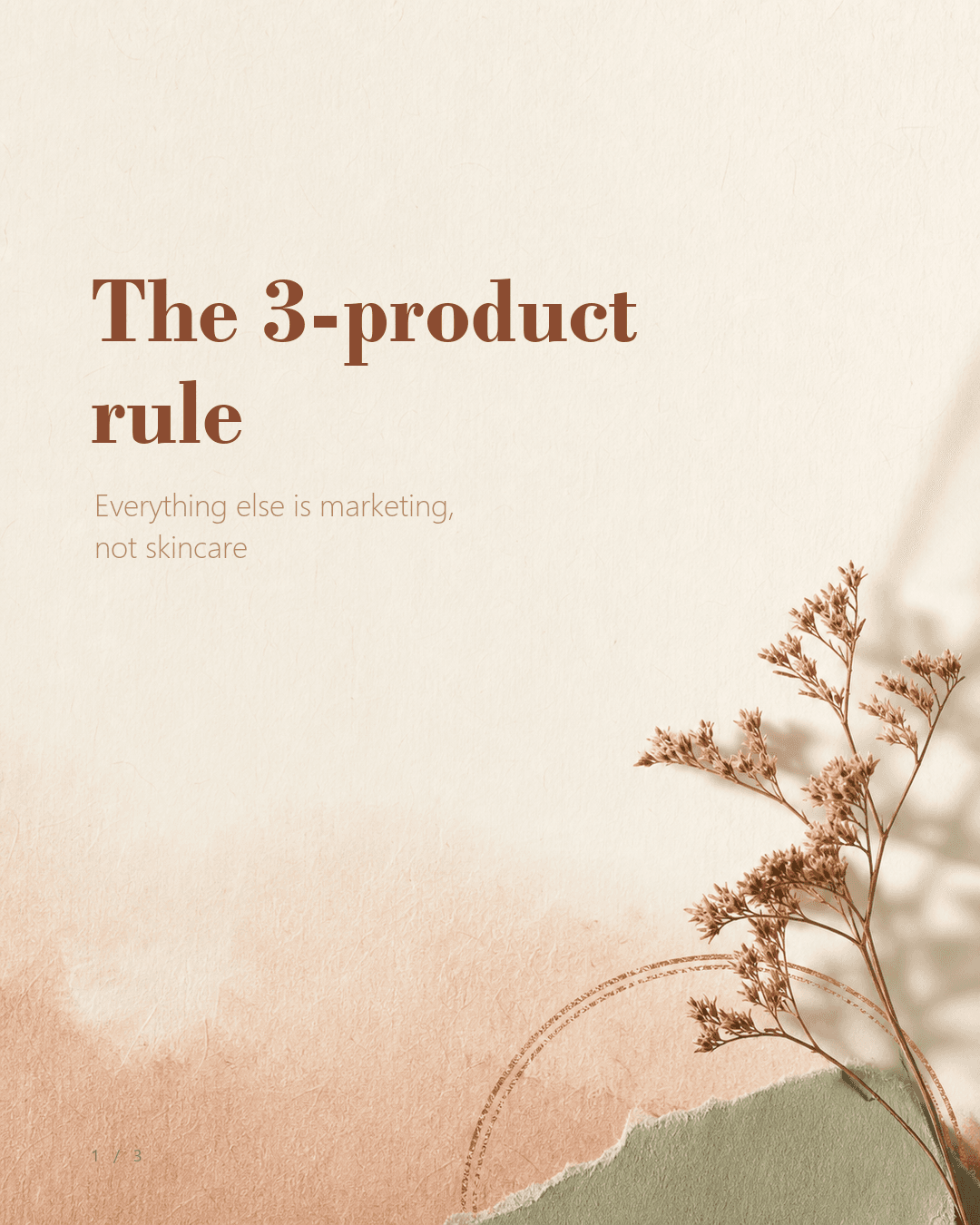
Meadowmarrow
Skincare & wellness — warm botanical, hand-torn paper
1 / 3
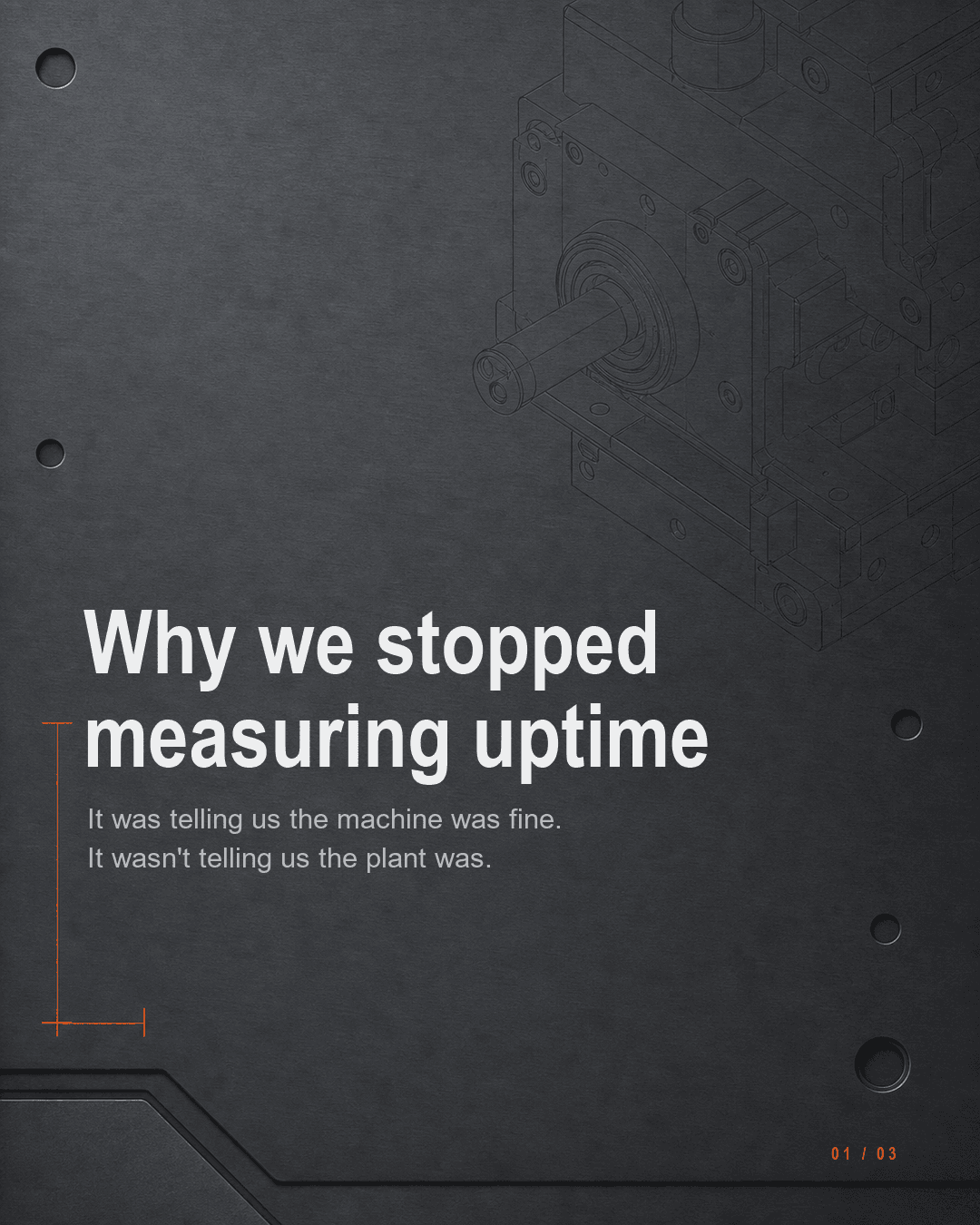
Forgepoint
Industrial B2B manufacturing — machined-panel, technical
1 / 3
Images, generated in your brand's world
AI images, art-directed per post — sample outputs. Every image is generated to match your brand's visual language, not a stock photo dropped in.
 Sample
 Sample
 Sample
What actually changes
Most presences don't fail from bad posts. They fail from gaps.
A week of consistent, in-voice posts beats an occasional great one.
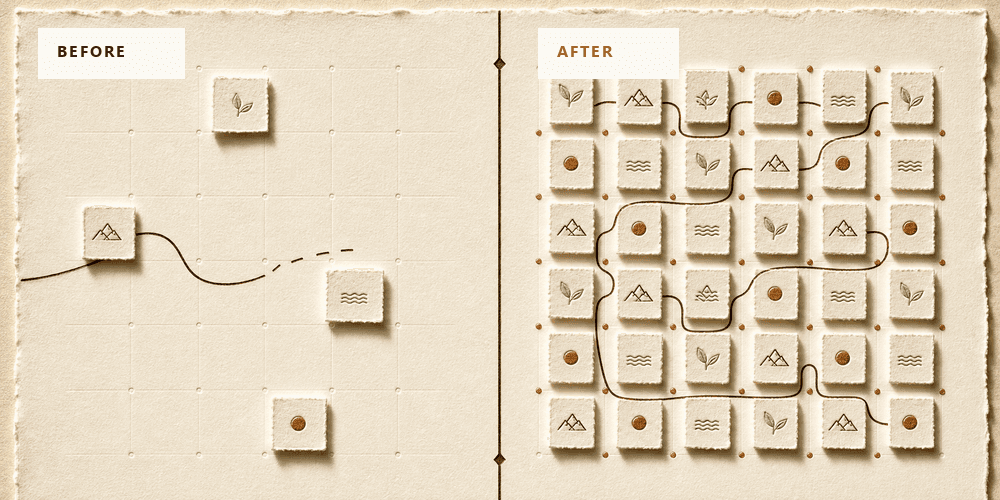
Before: bursts and gaps. After: a draft every evening, approved in five minutes.


The other honest question
Will this get my account flagged?
Short answer: no. We connect through LinkedIn's own official API, never password sharing or browser automation pretending to be you.
Read more
No browser automation, no scraping, no password sharing, no session cookies borrowed and reused. We picked the slower, more official path on purpose, and put our own accounts on it first.
Pricing
One plan. No hidden fees. Start today, or talk to us first.
Everything is included: the full approval loop of draft, review, edit, publish, plus the daily topic menu and news-reactive posts.
Founding launch
Thoughtcast
One plan. Everything you need for a daily LinkedIn presence.
- Up to 5 scheduled LinkedIn posts per week — you choose the cadence
- Ad-hoc posts any day via Telegram (message or voice note) — up to 10 posts/week total
- Every draft in your voice, approved by you before it ever publishes
- Daily topic menu: 5 suggested topics each evening, tap to choose
- One-tap approval on Telegram, or the dashboard
- Image posts (AI-generated, art-directed) — carousels coming soon
- Weekly activity summary on Telegram
- Performance analytics — coming soon
Billed monthly, cancel any time.
The founding offer
We're opening 50 founding seats.
Three months free, invitation only. We set you up on a 30-minute call and stay close while you find your voice.
- Three months completely free — full access, no card, no payment
- A 30-minute call where we set the whole thing up with you, not a script
- Your first week's drafts manually reviewed by our team before they ever reach your Telegram
- The option (with your permission, never without it) for your results to become one of our first real client proof points
Why only 50: Real scarcity, not marketing. Every seat starts with a call, and there are only so many we can do.
Request my founding seat
Takes two minutes. We'll follow up personally within 24 hours.
Why we built this
Why we built this instead of just posting more
Our team runs large-scale events and builds AI systems, the kind that actually ship, not the kind that stay in a slide deck. Both of those things need us visible on LinkedIn. Neither leaves much time to sit down and write a post most evenings.
We tried the usual fixes. A ghostwriter got the facts right and the voice wrong. Scheduling tools solved posting, not writing. AI writing tools gave us a draft we still had to prompt, edit, format, and remember to check on. None of it closed the loop.
So we built the tool we actually wanted: something that learns how you talk, writes a draft, and shows up on your phone at a time you're already looking at it. You approve it or you don't. Either way, you never open a dashboard you forgot existed.
Our own accounts are the first ones on it — we use every feature ourselves before a client does. If you want to see what the output looks like, the sample work above shows the kind of writing it produces.
If it's useful to us, running full-time jobs with no time to spare, we think it'll be useful to you too.
Questions people actually ask
FAQ
Built from a real interview and your own past posts, checked against your voice profile every time. You also approve or edit every post.It's built from a real interview with you and your own past posts, then every draft is checked against your specific voice profile, including patterns you'd never use, before you see it. You also approve or edit every post, so nothing generic gets past you either. Check the sample work section, that's the same pipeline.
Publishing happens through LinkedIn's official API with proper authorized access. No password sharing, no browser automation, no scraping.Publishing happens through LinkedIn's official API with proper authorized access, the same category of connection LinkedIn grants to tools it approves. No password sharing, no browser automation, no scraping. We built it this way specifically to protect your account, including our own.
About 5 minutes a day, most days less. A draft lands on Telegram every evening, you tap Approve, Edit, or Skip.About 5 minutes a day, most days less. A draft lands on Telegram in the evening, you tap Approve, Edit, or Skip. If you approve on sight, that's the entire time cost.
Tap Edit and reply with what to change, or tap Skip. No post goes out, no explanation needed.Tap Edit and reply with what to change. You get a revised draft back. You can go up to three rounds before it's flagged to our team directly for a closer look. Or just tap Skip, no post goes out, no explanation needed.
The post is skipped. It never publishes without your approval, no exceptions.The post is skipped. It never publishes without your approval, no exceptions, not even on a deadline. Silence means no, not yes.
ChatGPT gives you a draft you still have to prompt, edit, and post. Thoughtcast closes the whole loop: draft, approval, publish.ChatGPT gives you a draft. You still have to prompt it, edit it, format it, and post it yourself. Thoughtcast closes that whole loop: draft, approval, and publish, plus a weekly activity summary so you can see what went out. You approve outputs, you don't operate a tool.
Show 6 more questions
A ghostwriter learns your voice once and drifts over time. Thoughtcast checks every single draft against your voice profile, every time.A ghostwriter learns your voice once and drifts over months between calls. Thoughtcast checks every single draft against your voice profile, every time, and you're editing in the moment a draft is wrong, not on a call three weeks later when it's already stopped feeling like you.
Yes. The sample work section on this page shows posts and carousels from the exact same pipeline your account would run on.Yes. The sample work section on this page shows real posts and a carousel outline written for illustrative voice profiles, using the exact same drafting and voice-check pipeline your account would run on.
This touches your LinkedIn account, so we'd rather have one real conversation first. Self-serve billing is coming after launch.Because this touches your LinkedIn account and your professional voice, and we'd rather have one real conversation first than let anyone click through without knowing what they're signing up for. Self-serve billing is coming after launch; it isn't live yet.
Yes. Thoughtcast supports bringing your own key in account settings, a supported option, not a workaround.Yes. Thoughtcast supports bringing your own key in account settings. If you'd rather run on your own provider account instead of ours, that's a supported option, not a workaround.
One plan, everything included: up to 10 posts a week, daily topic menu, one-tap approval, image posts, and a weekly summary. Full pricing above.One plan, everything included: up to 5 scheduled posts a week (your cadence), plus ad-hoc posts any day via Telegram (up to 10 posts a week total), a daily topic menu of 5 suggestions, one-tap approval on Telegram or the dashboard, AI-generated image posts, and a weekly activity summary on Telegram. Carousels and performance analytics are both coming soon. Full pricing for your region is above.
A weekly activity summary lands on Telegram: what you posted, your streak, and the topics covered. Full analytics are coming soon.A weekly activity summary lands on Telegram: what you posted, your streak, and the topics covered. Performance analytics (impressions, engagement, and what's working) is coming soon, once we've locked in our LinkedIn partner approval — we'd rather ship it right than promise numbers we can't back yet.